
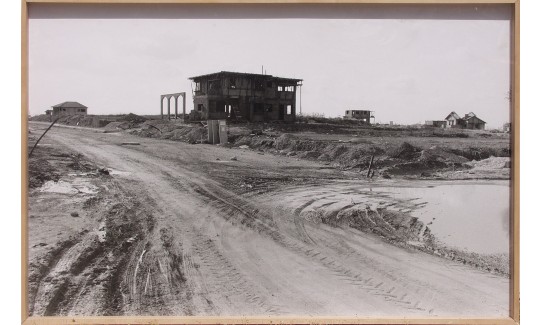
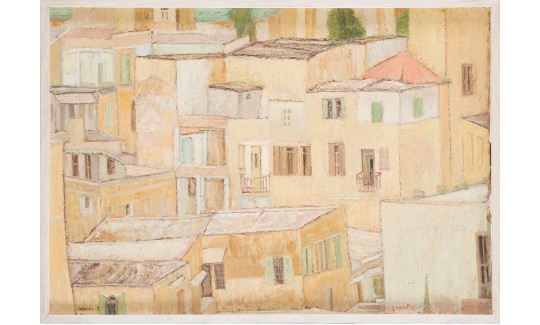
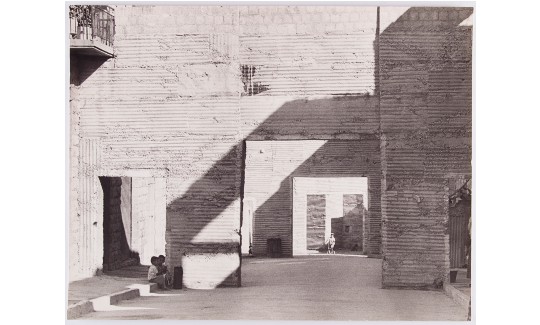
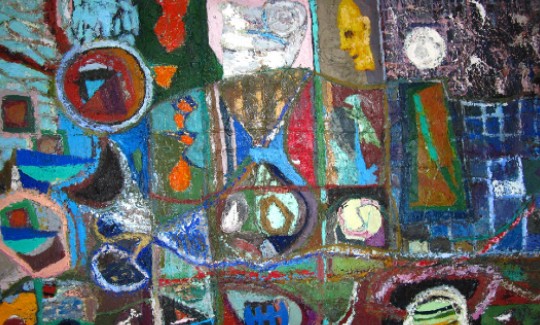
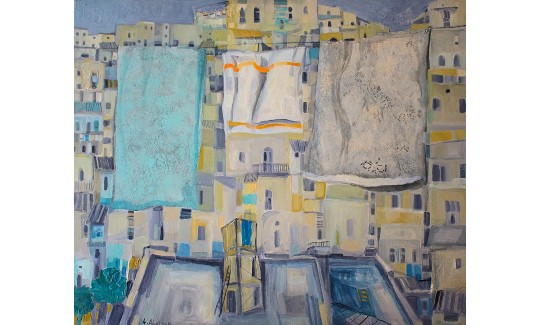

Architecture is a human act of expropriating space from nature for human habitation. It creates an urban landscape, consisting of geometric shapes of doors and windows, shutters and air conditioners. Yehoshua Grossbard (1902–1992), who lived next to Haifa Museum of Art, repeatedly depicted building façades. His paintings on view here are variations on a theme, referring to architectural structures as geometric sculptural objects translated into two-dimensional images. Unlike Grossbard, the 1970s artists whose works are displayed next to his, eliminate the identifying marks of the architectural structure, but their core action is not fundamentally different from his, as they also examine the relationship between the two-dimensional surface, whether paper or wood, and the three-dimensional spaces of reality.
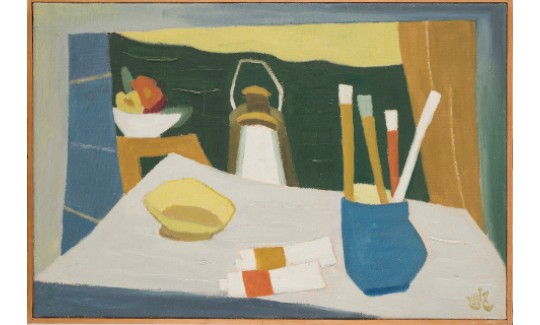
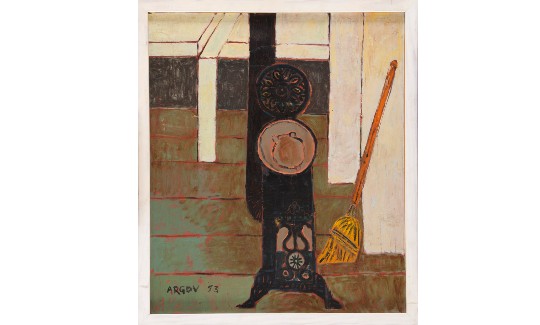
Domestication of nature takes place indoors, too: water flows in pipes, a stone is hewn for flooring, and vegetation is enclosed in a planter. Since the 17th century, painting of interiors and the objects in them—"still life" painting—has been one of the most fruitful areas of artistic experimentation, far more than historical subjects or portraiture. Still life painting is the closest thing to self-expression, since the artist has complete control over the choice of objects and their composition. The interior paintings on view in these halls are, in many respects, alternative self-portraits, depictions of human life and thought through objects of desire.