
Exhibitions
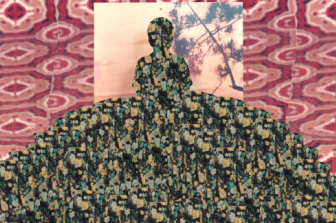
Space for Community Art: Rachel Anyo Figure Coming to Life
Rachel Anyo creates a new visual image of a feminist Ethiopian woman. She recruited 13 differently-aged women of Ethiopian origin for the project, and together they explored their culture by working in the collage technique. Based on a database of images prepared by Anyo from her family albums, the participants created collages under the guidance of the artist, who deconstructed and reconstructed them into new collages all her own.
Saturday, 22.02.25
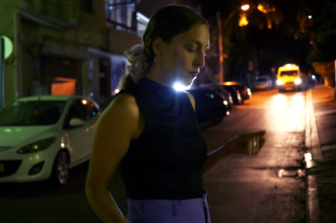
Space for Community Art: Liron Hana Ohayon & Amit Gavish 6+1
Equipped with white overalls, compassion and courage, Liron Hana Ohayon and Amit Gavish lead an interdisciplinary artistic act in the streets of Haifa. They gathered six women who recently moved to Haifa for a joint creative process, which included a confession and a statement of identity aimed at pushing the boundaries of involvement in the space. The six video works on view are elaborations of six acts of female healing, whose gist is coping together with personal passions and fears.
Saturday, 22.02.25
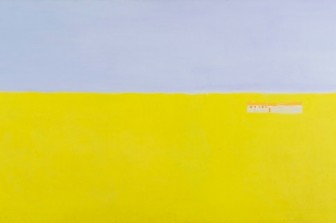
Northern Wind | Israeli Art from the Museum's Collection
A north wind blows through the collection of Haifa Museum of Art. The museum’s location in the city of Haifa is reflected in its collection, which contains many works by artists based in Haifa and the north, attesting to Haifa’s unique identity: as a port city, the relation to immigrants and refugees repeatedly surfaces in the works; as a workers’ city, many of the works address class issues; and as a city nestled in a unique topography between the sea and the mountain, the works delve into interrelations between the earthly and the spiritual. From its focal point in the north, the collection also converses with Israel’s art centers, with Arab culture, and with Western modern art: turning south, to artistic practice in Tel Aviv and Jerusalem; east, beyond the Jordan Valley; and west, to what is happening overseas.
Saturday, 22.02.25
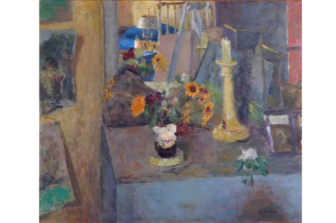
At Home: Dwelling of Loves and Anxieties
Our home, and the objects in it, tell stories: in the kitchen cupboard there is a partial set of dishes, some broke during a move; in the living room there is a worn sofa, which has taken the shape of the body due to overuse; on the wall behind it are pictures of smiling relatives, some still alive, others no longer. Our favorite people and things are usually found in our living environment, and a representation of the interior shows everything that we love and fear for.
Saturday, 29.06.24
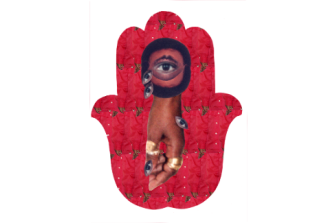
A New World of Paper - Gallery for Families
Collage is an important technique in art. It allows you to connect different worlds and create things that only exist in the imagination. To create a collage, you cut images from different sources, take them apart, and then put the pieces together in a new, surprising way. The odder the cuts and links, the more striking the resulting new creation.
Saturday, 22.02.25
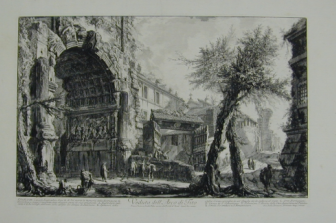
Piranesi: Views of Rome
Giovanni Battista Piranesi was active in Rome in the mid-18th century, at a time when the city attracted intellectuals from all over Europe who gathered against the backdrop of its celebrated centuries-old buildings. In his time, Rome was one of the major centers of the Enlightenment: a mandatory destination on the Grand Tour undertaken by members of the aristocracy to explore the cultural capitals of Europe, and a focal point for the study of classical culture for artists and intellectuals. Piranesi created countless etchings in Rome featuring the city's sights, making a name for himself throughout Europe. The Haifa Museum of Art collection is blessed with a considerable selection of these etchings.
Saturday, 29.06.24
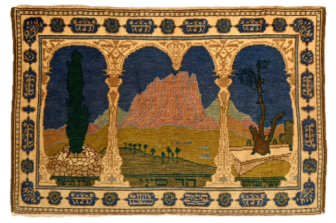
A Sun-Kissed Land: Schusterman Collection at the Museum
The selection presented in the exhibition, a generous gift from Ms. Lynn Schusterman to the Museum, spans mainly works from the first half of the 20th century, the formative period of Israeli art. This cluster adds a significant artistic and historical layer to the Museum's existing collection (on view in the nearby permanent exhibition), which focuses primarily on Israeli art from the 1950s onwards. It attests to the transformations that occurred in local art over the years, highlighting issues in Israeli culture that are still relevant decades later. Although they were created in different parts of the country, the scorching Israeli sun shines over all of the featured works.
Saturday, 29.06.24
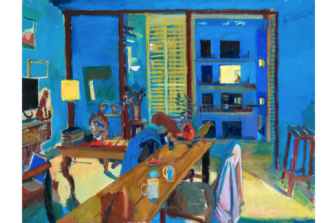
Natalia Zourabova Living in Painting
Be it in Moscow, Berlin, Be'er Sheva, or Jaffa, Natalia Zourabova primarily paints the interior of her home. The gaze at the living environment is a means of adapting to it, and Zourabova discovers the place through painting; more accurately: by rendering the domestic interior, she discovers painting. Interior depictions tie the home to the studio, life to work. The painting is created in a familiar, loved place, but at the same time it pits the challenges of life against those of painting. Every moment spent at home is a time of studying the act of painting while mapping the space, perusing the shapes, colors, and textures that make up her habitat.
Saturday, 29.06.24
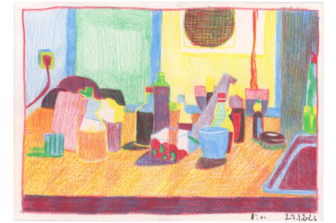
My own room | The BFAMI Family Gallery
My room is my best place. We decide what to hang on the walls in it, we keep the most important things in it, and we close ourselves in it when we want to be only with ourselves.
We invite you to show us what your room looks like, or the room of your dreams: draw the room on a postcard, and be sure to describe the objects and details that make it your special place, different from all other rooms.
Saturday, 29.06.24
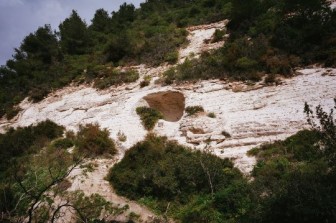
WADI
Wadi - is a hydrologic geological formation, and a term in Arabic, Hebrew, and English describing different forms of seasonal flow, associated with areas with little precipitation.
In Haifa, however, a wadi is also a mental state; the city's wadis are used for momentary respites from the routine, for various games, and for alternative community gatherings. At the same time, they also embed darkness, all sorts of waste, and complex ecosystems of flora and fauna, which exist in a world parallel to everyday life.
The exhibition addresses different manifestations of this alternate universe.
Saturday, 30.12.23
Please contact us and we will contact you as soon as possible